Regular readers will be aware of the death by poisoning of a white-tailed eagle earlier this year. The remains of the bird, known as G461, were recovered on a shooting estate in Dorset in January and subsequent toxicology tests showed it had been poisoned. G461 was found to have levels of a rodenticide called brodifacoum sufficient to kill it seven times over.
Dorset Police, despite being part of the team that recovered G461, announced last month that it was closing its investigation into the birds death and making no further enquiries. The inference was that there was no basis to proceed with an investigation since the the poor animal could have ingested the poison elsewhere begore travelling to its final resting place and that, even if had been poisoned on the site on which it was found, there was little prospect of proving who had administered the rodenticide and/or whether they had intended to kill a protected species.
Most observers found the speed at which Dorset Police reached this conclusion to be surprising and the lack of appetite to at least ask further questions to be disconcerting. Especially since a Dorset MP, funded by a Dorset shooting estate, had publicly berated the county’s Rural Crime Team for looking into the facts of G461’s death in the first place.
All this got me wondering about how brodifacoum and substances like it are deployed in the countryside. Could it be that the stuff is piled up all over Dorset in great mounds and greedily plundered by all manner of wildlife? Is anyone allowed to throw it around the woods, fields and lanes of the county? Is a dose that could kill the UK’s largest bird of prey seven times over a worry or is that a standard portion? So I did a bit of research and the results leave me very cross indeed (I’m being polite).
Like most people, I imagine, I’d never heard of brodifacoum. It’s an anticoagulant with a similar mode of action to its predecessors dicoumarol and warfarin. The latter is most likely to be known to you as a blood thinner often prescribed to people with cardiovascular problems. Due to its very high potency and long duration of action (it has a half-life of 10 to 130 days so degrades very slowly) brodifacoum is characterised as a “second-generation” anticoagulant. It, and similar substances, are generally referred to as SGARs (Second Generation Anticoagulant Rodenticides).
SGARs present one of the highest risks of secondary poisoning to both mammals and birds in the UK, especially birds of prey. Because of the risks associated with their use a “stewardship” regime was developed in 2016 which included the expectation that anyone buying or using “professional-only” SGARs should obtain certification demonstrating they have the appropriate training and knowledge to deploy them. (Answering one of my questions – we can’t all just buy the stuff and lob it over a hedge). The BASC website confirms this and helpfully provides links to appropriate training and certification courses for gamekeepers. In addition, specific advice for “game management” has been laid down by the Campaign for Responsible Rodenticide Use (CRRU) in the form of “CRRU Pest Control and Game Management (Second Edition, July 2017)”.
Annual records of “non-target” animal contamination (animals that aren’t rats or house mice) are kept by the UK Centre for Ecology and Hydrology (CEH) through something called the Predatory Bird Monitoring Scheme (PBMS). It’s thanks to these bodies the original belief that barn owl exposure to anticoagulants peaked at about 40% was debunked when more recent residue analysis showed the number of exposed UK barn owls to be closer to 90%. It’s also been established that anticoagulant rodenticides are routinely found in red kites, sparrowhawks, buzzards, peregrine falcons, tawny owls, kestrels, stoats, weasels, polecats, foxes, badgers and even hedgehogs.
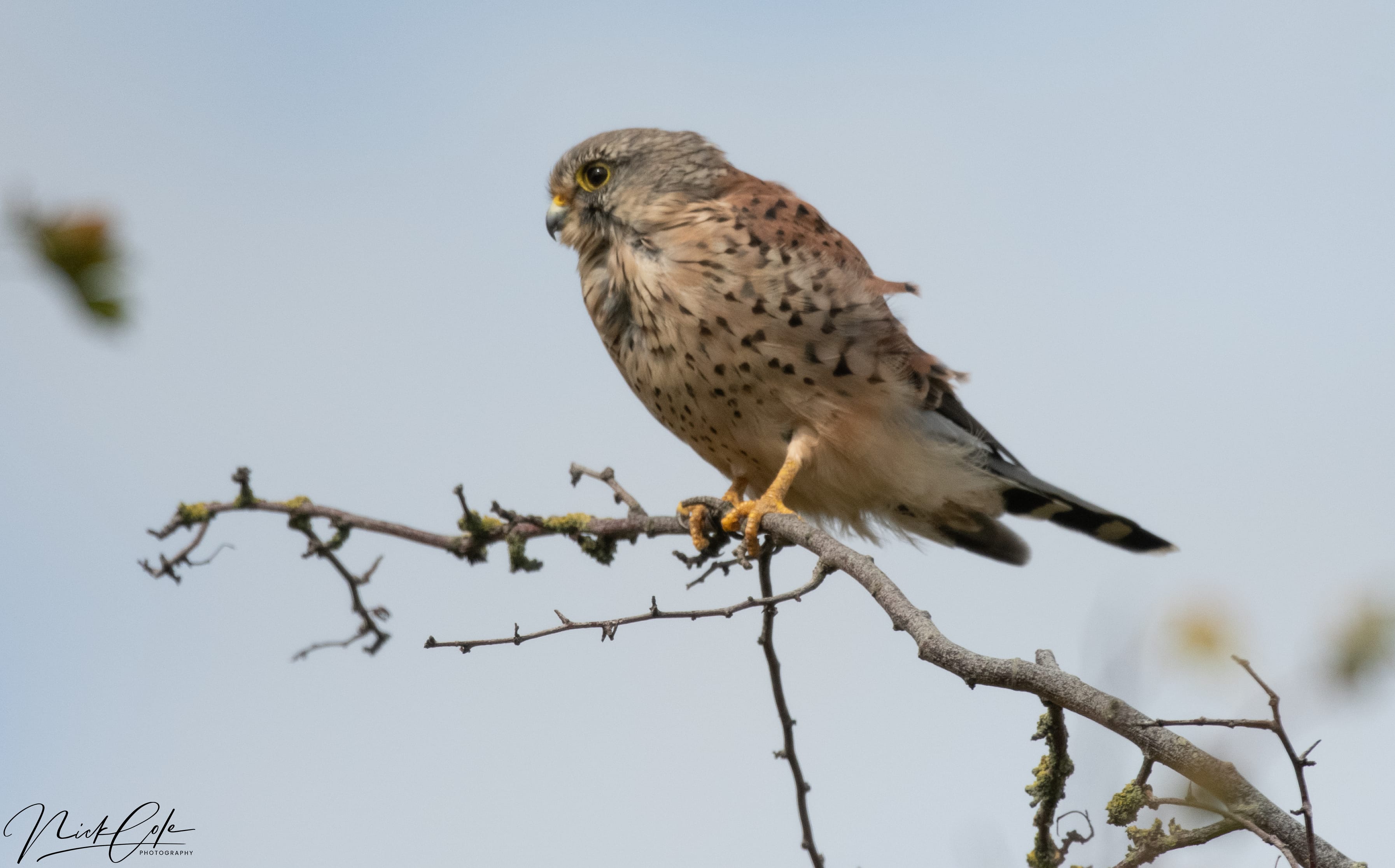
Almost 70% of examined kestrels in the UK were found to carry rodenticide residues and that discovery alone set alarm bells ringing and brought about the 2016 regime. Why? Because kestrels rarely eat rats or house mice and feed almost exclusively on voles and wood mice. They could only be ingesting rodenticides through eating non-target species and the same had to be true for barn owls, tawny owls and other protected species for the same reason.
The CRRU advice to gamekeepers is comprehensive and robust. It recommends various alternatives to using SGARs and that rodenticides should only be used when all other methods have been shown to be ineffective or impractical, because of the high risk of both primary and secondary poisoning to non-target animals. It makes crystal clear that the only two acceptable methods of use are either by directly baiting rodent burrows or through the use of protected bait stations. So, no mounds of SGAR piled up around the county. No massive doses for an unsuspecting bird of prey to encounter and tuck into.
Those who deploy SGARs know in no uncertain terms that it’s effectively a weapon of mass destruction. It carries a prolonged risk to wildlife during ineffective baiting programmes in which baits are badly positioned, are too few, contain the incorrect amount of rodenticide or are not managed according to CRRU best practice. And those practices are not difficult to abide by.
The CRRU advice includes keeping careful records which should include:
- an assessment of the size and distribution of the rat infestation
- the trade name of the bait used and the active substances within it
- an environmental risk assessment and record of the measures adopted
- the number of bait points created and their exact locations
- the amount of bait put down and the dates of baiting
- whether the bait was applied directly to burrows or if bait stations were used
- the dates/times of visits to check each bait area and remove dead rodents
- the number of dead rodents found and how they were disposed of
- the dates when baits were removed from the baited area
- the approximate quantity of uneaten bait picked up and how it was disposed of
The CRRU guidance finishes by suggesting that adhering to its recommendations will ensure rodenticide baiting is carried out by trained, certificated gamekeepers “in the best possible way with a minimum impact on wildlife and the wider environment. Correct use will also forestall calls to restrict rodenticide use”.
Is any of that rocket science? Nope. Difficult to follow? Not at all. Easy to stray away from, become complacent about and eventually ignore? Absolutely. If your motivation is to kill and not to conserve or protect.
The CEH (remember them from earlier?) in a 2021 paper commissioned by the CRRU reported that 87% of 100 barn owls that died and were examined in 2019 had detectable liver residues of one or more SGAR. The bodies were located right across the UK. In the same year 91% of 43 red kites examined (31 in England and 12 in Scotland) had detectable SGAR residues in their livers of which brodifacoum and difenacoum were the most prevalent. The SGAR presence didn’t account for the death of the birds in all of these cases but given that it causes prolonged internal haemorrhaging it’s likely to have contributed to their demise.
So where does all this lead us? I’m no Hercule Poirot but if I was responsible for wildlife crime in Dorset I would, at least, be visiting the shooting estates in the area where G461, and other recently poisoned birds of prey, were found. As a minimum I’d be wanting to interview every land manager and every single gamekeeper certificated to use SGARs. I’d be asking to examine the SGAR usage records and to be shown how and where the rodenticide is stored. And I’d want to be shown the burrows and protected bait stations in which the poison was being deployed.
Clearly Dorset police and/or Natural England either felt that any further investigation was too much work, the illegal killing of a protected and much-admired species wasn’t worth the effort or were influenced by a combination of landowners and/or their pet MP. Perhaps they didn’t know about the CRRU guidelines. Maybe they just don’t care enough. For a white tailed eagle to end up with 7 times a lethal dose of brodifacoum in its system a crime has been committed in no uncertain terms. A rare, protected species has been killed through negligence, incompetence or as a deliberate act. It’s only a bird though, right?
The CRRU’s belief that the correct use of SGARs will minimise their impact on wildlife, and the wider environment, as well as forestall calls to restrict rodenticide use neglected one key consideration. That among the landowning and gamekeeper fraternity are a number of individuals for whom profit is the priority and for whom maintaining the environment and protecting wildlife are a long way down the list of personal or professional objectives. Ignoring their illegal activities is never going to be the solution. And if we can’t regulate or supervise their actions, let’s revisit introducing legislative restrictions on the use of SGAR’s in the UK.
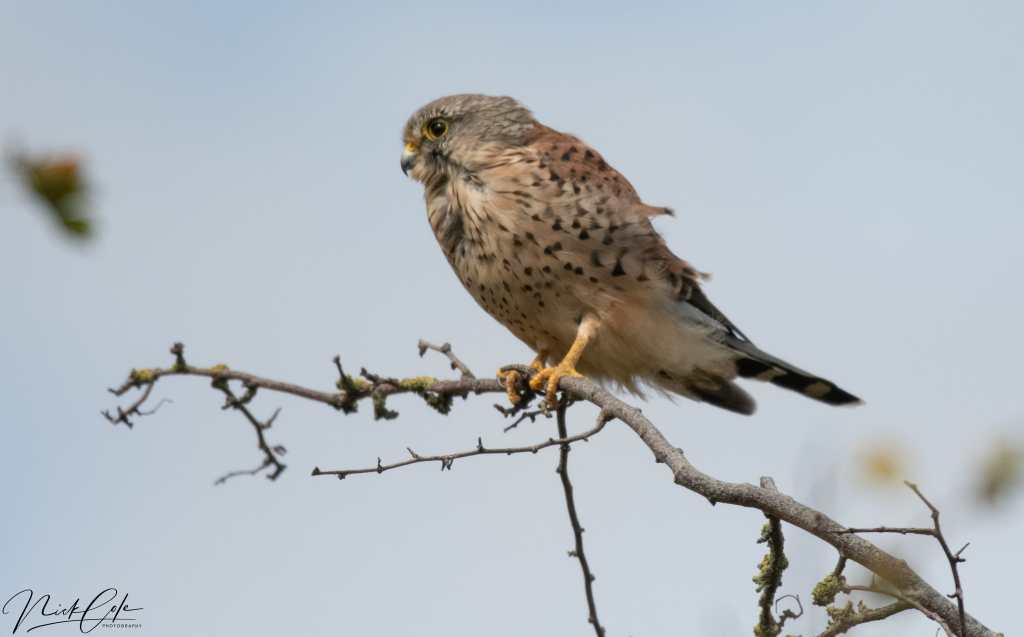
European Kestrel, Farlington Marshes, Hampshire. Photographed by me.

 ecolelogical