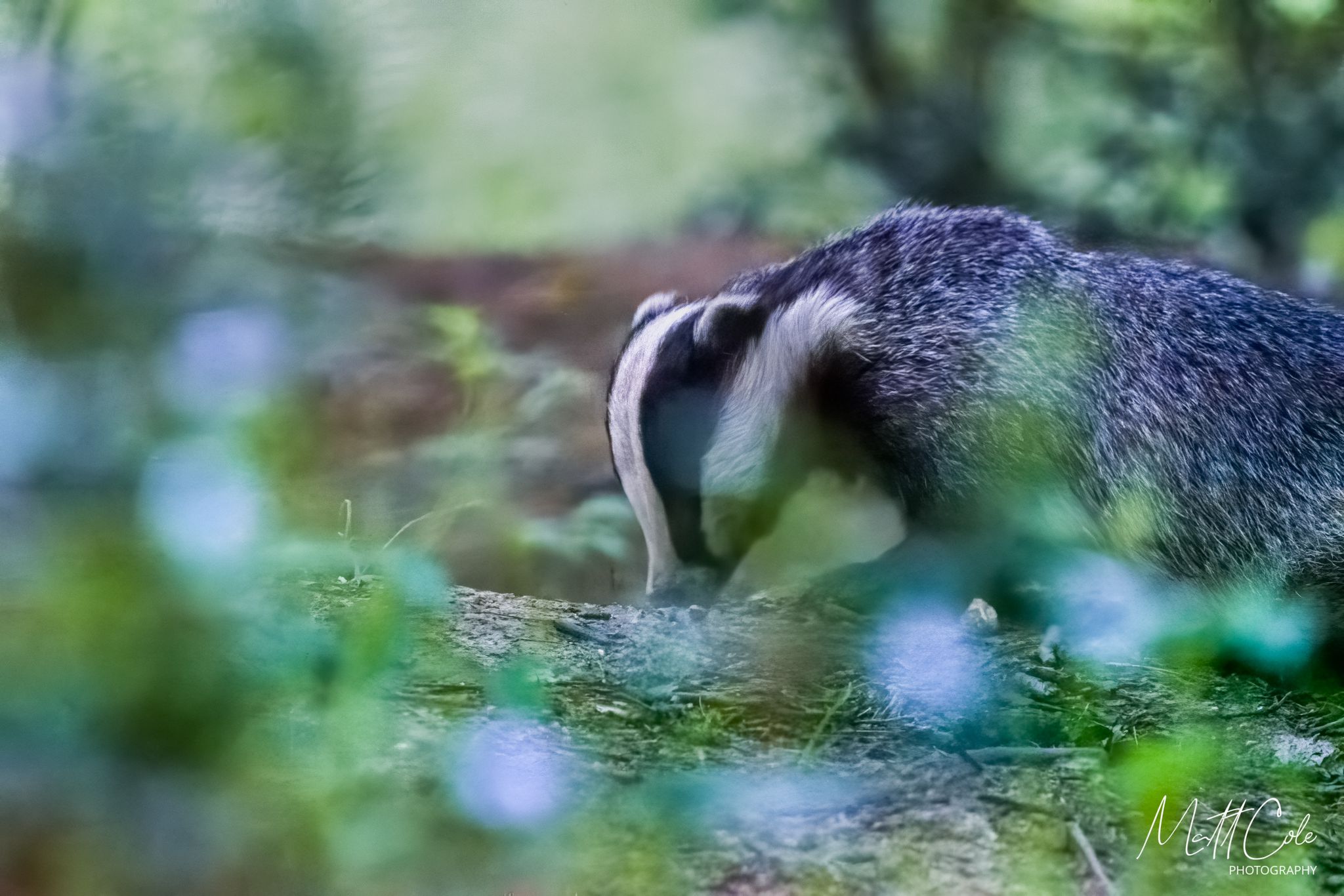
Last year a dog-walker we know came across a blocked badger sett adjacent to the site of a new housing development, leading to me getting involved with the developer and the local rural crime team to establish the sett had been blocked lawfully under license from Natural England. No harm, no foul. It got me thinking though, which got me doing some reading and research and the realisation that there’s no badger protection or monitoring group in Hampshire. Well, none that’s known to or a member of the Badger Trust other than a long-established and effective group working with Forestry England in the New Forest.
It bothered me enough to contact the Badger Trust, liaise with the nearest group in Berkshire and, cutting a very long story short, deciding to actively do something about it. Thus, the North East Hampshire Badger Group is in the process of being born. Which is to say we have a constitution, bank account and Badger Trust “Associate Membership” applications pending, a new Twitter profile and a private Facebook Page set-up through which to drum up interest, members and volunteers. There’s a lot more to do (membership application process, website creation, grant application, PR and other admin) and an urgent need to locate and survey badger setts ito understand the whereabouts and dynamics of Hampshire’s badger population. Without that data, there’s little we can achieve effectively in terms of sett protection, monitoring or working alongside local planning authorities to help them avoid inadvertently breaking the law.
Badgers and their setts are protected under the Protection of Badgers Act 1992 and the Wildlife & Countryside Act 1981. So why is there any need for Badger Group, let alone a new one in Hampshire? The short answer is “because somebody should”. The Protection of Badgers Act came into being because badgers have long been persecuted whether through sett blocking, badger baiting, general animal cruelty, pressure from property development, road traffic incidents and, right now, through culling under license from Natural England, the Government’s own agency responsible for nature and the natural environment.
Since 2013, at least 176,928 badgers have been killed under license across England. That’s over one third of the entire UK badger population. Of that number, 126,392 were shot and the remainder trapped, then shot. In 2021 Natural England added 7 new cull areas, including Hampshire, with applications available to cull companies to obtain 4-year licenses. The UK Government aims to cull between 70%-90% of all badgers in each cull area and up to 72% of ALL UK badgers are expected to have been culled by 2025. Over 99.5% of the badgers killed under license are shot without any animal welfare monitoring. Of the very few culled badgers tested, the majority have been found to be free of bTB.
Why is this happening? Because the Government, and farmers, believe that badgers shoulder the blame for the spread of bovine tuberculosis (bTB) in cattle despite that assertion being discredited by scientists in independent, peer-reviewed studies and papers. Badgers are not to blame for bTB in cattle and the cull has made no difference to bTB infections in cattle. Over 94% of bTB transmission is from cow to cow and the unreliability of current testing methods leaves infected cattle undetected and able to spread the disease. The badger cull is unscientific, inhumane, and causes fear and pain to a protected species. The Government and the cattle-farming industry has been reluctant to use effective methods to counter and ultimately stop bTB through a focus on cattle and cattle-based measures such as better testing, herd managements controls, effective slurry management, additional biosecurity measures and cattle vaccination. It’s easier, and cheaper, to blame and cull badgers.
So, as well as collating data on Hampshire’s badgers, protecting them from cruelty. traffic injury and property development we’ll be supporting the Badger Trust’s priority campaign to #CanTheCull advocating, educating and, where necessary, agitating to stop the senseless slaughter and push the focus to cattle, where the problem starts and ends. The Government must stop targeting this protected species as a scapegoat for bTB and focus on farming measures and herd management to eradicate what is a respiratory disease in cattle.
If you’d like to find out more about North East Hampshire Badger Group and offer some moral support please search us out on Facebook. It’s a private page but do ask to join. Our Twitter account is @NEHBadgerGroup. I’ll add details of our website as soon as it’s up and running. Please don’t be complacent that the cull isn’t on our doorstep. The supplementary cull extensions announced by Natural England in May lists all the sites in Hampshire for which cull licenses can be applied. The include sites right across the county from the Blackwater Valley right down to the south coast and include the Basingstoke Canal. The cull season runs from 1st June to 31st January.
If you’d like to become a paid-up member (cost of a couple of coffees annually) then please let me know. We’re still in the process of putting our membership process in place and I’ll happily add you to a contact list so you can be sent details in due course.
If you’re interested in getting involved in the running of the Group or, better still, locating, surveying and monitoring setts then please also get in touch. Initially, we’re focusing on the North East Hampshire area (Hart, Rushmoor and East Hampshire council territories) but looking to reach out to any interested parties elsewhere in Hampshire and covering as much of the county as our resources allow.

 ecolelogical